ABS and HD Hyundai Study Nuclear Propulsion for 16,000-TEU Containership
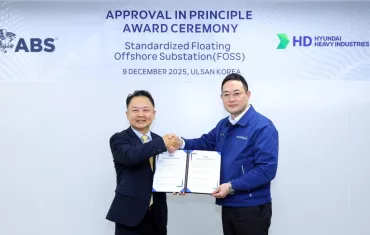
Classification society American Bureau of Shipping (ABS) and South Korea’s HD Hyundai have launched a joint project to study nuclear propulsion for a 16,000-TEU containership, The Maritime Telegraph reports. The initiative reflects the shipping industry’s growing search for zero-carbon propulsion technologies.
The study will focus on a concept design of a nuclear-powered electric propulsion system for large container vessels. Shipbuilding partners HD Korea Shipbuilding & Offshore Engineering and HD Hyundai Samho Heavy Industries will develop the vessel’s basic design, electrical specifications, and system layout for the nuclear-powered concept.
Interest in carbon-free shipping solutions is rising as shipowners face pressure to meet global decarbonization targets. HD Hyundai says expanding research into nuclear-powered electric propulsion could strengthen its position in next-generation ship technologies.
Several similar initiatives have emerged recently. In 2025, the Korea Atomic Energy Research Institute and Samsung Heavy Industries received Approval in Principle from ABS and the Liberian Registry for a nuclear-powered LNG carrier concept.
However, nuclear propulsion for commercial ships remains in its early stages. Regulatory rules, port acceptance, insurance frameworks, and crew training must still be developed before such vessels can enter service.