Trump Administration Expands Military Campaign Against Drug Smugglers
The Trump administration has carried out its first nighttime military strike against suspected drug traffickers in the Caribbean Sea, killing six people aboard a vessel linked to the Venezuelan criminal group Tren de Aragua, gCaptain reports.
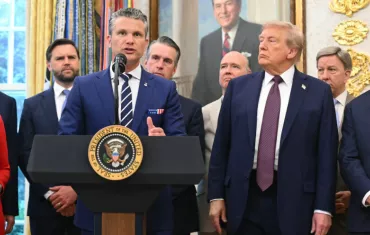
According to Secretary of War Pete Hegseth, the targeted ship was identified through U.S. intelligence as part of an illicit narcotics network operating along a known smuggling corridor in international waters. “If you are a narco-terrorist smuggling drugs in our hemisphere, we will treat you like Al-Qaeda,” Hegseth declared, emphasizing that the campaign will continue “day or night.”
The strike marks a sharp escalation in Washington’s anti-drug operations, which have resulted in ten attacks and nearly four dozen fatalities since early September. While President Donald Trump has said he does not plan to seek a formal declaration of war against cartels, he vowed to continue lethal operations, stating bluntly, “We’re just going to kill people bringing drugs into our country.”
Recent U.S. military actions have also extended into the Eastern Pacific, where two additional strikes on October 21 and 22 killed five suspects. Meanwhile, the U.S. Coast Guard continues its parallel campaign, seizing over 100,000 pounds of cocaine under Operation Pacific Viper since August.
The administration has formally designated the campaign as a “non-international armed conflict” with drug cartels. The move has sparked legal debate over the use of military force instead of traditional law enforcement. Critics question the lack of non-lethal alternatives, while officials defend the policy as necessary to counter what Hegseth calls “the Al-Qaeda of the Western Hemisphere.”
Trump hinted that future operations could move to land routes, signaling that the administration’s war on narcotrafficking may soon expand beyond the sea.