Hong Kong Tanker Collision: Court Jails Captain After Fatal Fishing Boat Crash

A Hong Kong court has sentenced the captain of an oil tanker to 14 months in prison following a deadly collision with a local fishing boat, a case that has once again exposed serious navigational safety risks in busy coastal waters. The court ruling and key details of the proceedings were reported by NextShip.
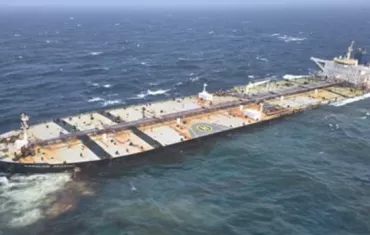
The collision occurred in November 2024, when a mainland China-registered tanker was transiting Hong Kong waters on a fuel voyage to Huizhou, while a fishing vessel was heading toward the Aberdeen Typhoon Shelter. Information on the vessels’ routes and the timing of the accident was published by The Maritime Telegraph. The impact caused the fishing boat to sink rapidly, throwing all seven people on board into the sea. Six crew members were rescued, while the fishing vessel’s master was later found dead after being reported missing.
Evidence presented in court showed that the incident happened at around 4:00 a.m.. Radar records and visual observations confirmed that the fishing boat was visible on a converging course, a detail outlined in court findings cited by NextShip. The tanker captain acknowledged seeing a red navigation light on his starboard side but failed to carry out a proper risk assessment or confirm whether the fishing vessel was manned on deck.
The court heard that the captain attempted to warn the fishing boat using a laser pointer and ordered engine reversal only when the distance between the two vessels had reduced to approximately 50 metres, leaving no effective room for evasive manoeuvres. After the collision, the tanker crew raised the alarm and assisted in rescue operations.
Investigators later identified several violations of safe navigation and lookout requirements, including delayed speed reduction in congested waters. Findings related to breaches of collision prevention rules were consistent with guidance issued by the Hong Kong Marine Department, which stresses early action and continuous situational awareness in high-traffic areas. The court concluded that these failures played a decisive role in the fatal outcome, reinforcing the legal responsibility of shipmasters to prevent collisions at sea.