Maersk Keeps Gulf Shipping Restrictions
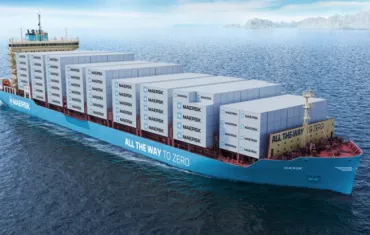
Maersk continues to maintain cargo restrictions and emergency surcharges across the Persian Gulf, showing that shipping operations have not returned to normal despite recent efforts to reopen the Strait of Hormuz. GCaptain reports that the company still sees the situation in the region as highly volatile and warns that conditions can change quickly.
The Danish carrier continues to limit or suspend bookings for several types of cargo in Iraq, Kuwait, Qatar, Bahrain, parts of Saudi Arabia, and the United Arab Emirates. Restrictions remain in place for refrigerated cargo, dangerous goods, oversized shipments, and some dry cargo.
To cover additional operational costs, Maersk has introduced a Strait of Hormuz Emergency Freight surcharge. The fee is set at $1,800 for a 20-foot container, $3,000 for a 40-foot container, and $3,800 for reefer, special, and dangerous goods containers.
Instead of returning to normal routes, the company is still using alternative logistics solutions developed during the crisis. Cargo bound for several Gulf countries is being routed through Salalah and Khor Fakkan before continuing to its final destination through regional transport networks.
The company also noted that some insurers have reduced or withdrawn coverage for shipments moving through the Red Sea, the Gulf of Oman, and the Persian Gulf. This adds further uncertainty for carriers and cargo owners.
The latest advisory highlights that reopening the Strait of Hormuz is only one step toward recovery. Shipping companies are still dealing with security concerns, higher operating costs, and disrupted supply chains across one of the world's most important maritime trade routes.